What is Attar?
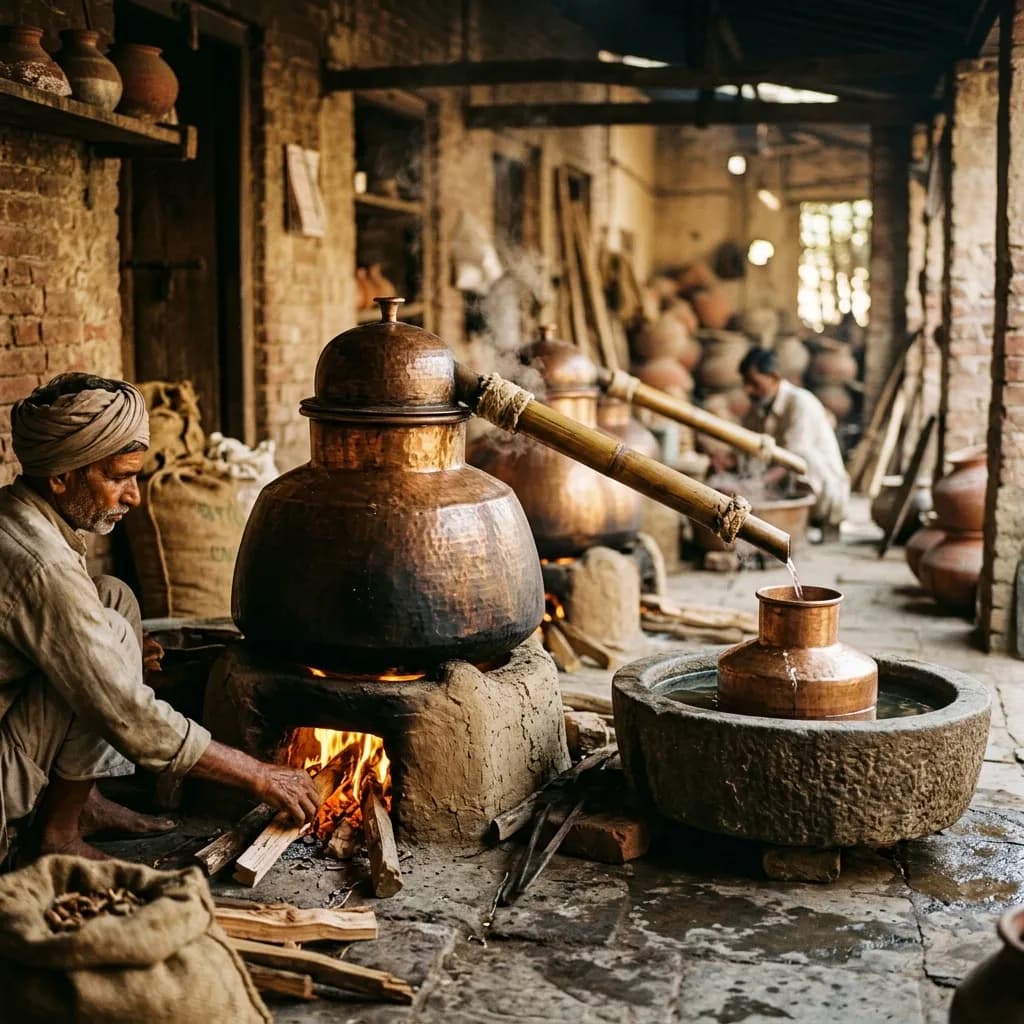
Attar (also spelled ittar) is a perfume oil worn on skin, with no alcohol. Traditionally it is made by distilling flowers, herbs, spices and woods in copper vessels called deg and bhapka, and collecting the fragrance in a base oil — a slow craft that can take weeks for a single batch.
Ours come from a perfumer in Kannauj and sit on a carrier oil base; some are compounded blends. We bottle every one by hand.
Kannauj — India's Grasse
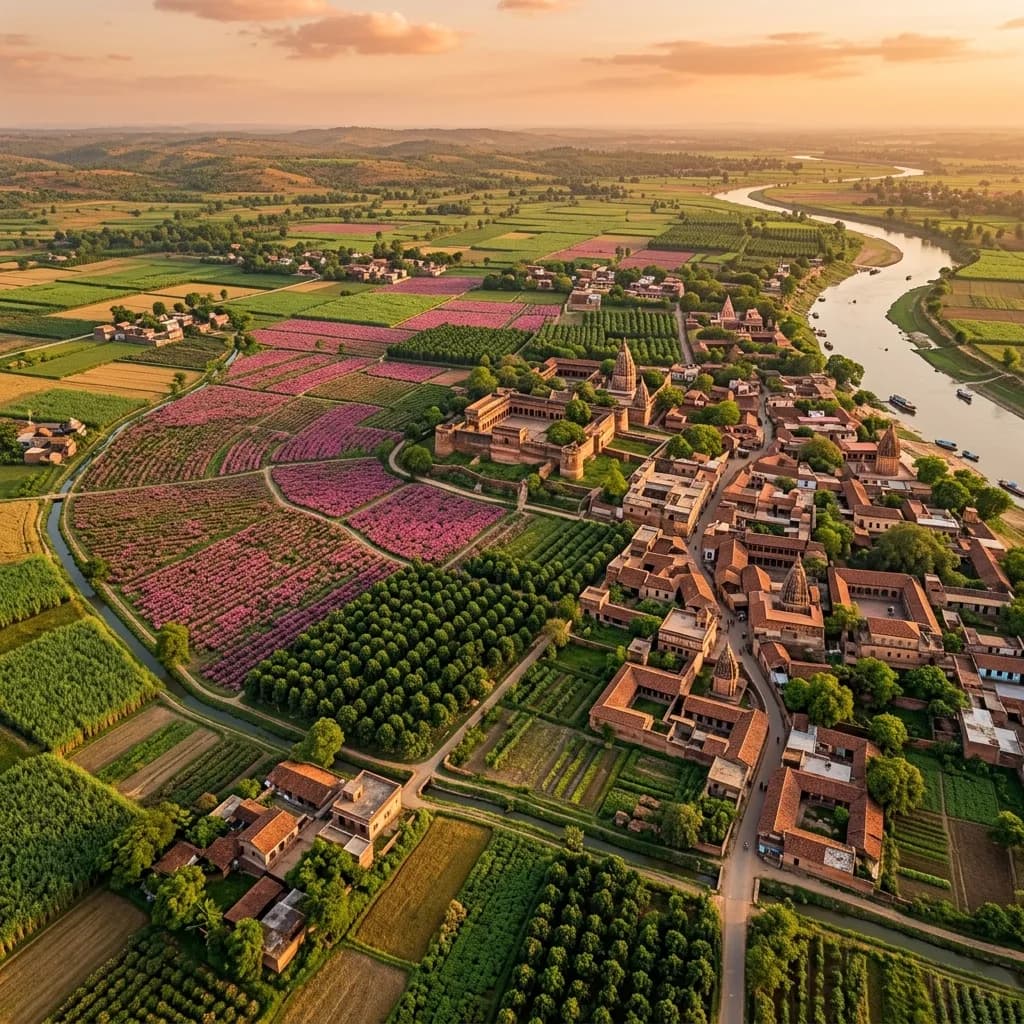
Three hundred kilometres southeast of Delhi, on the banks of the Ganga, sits Kannauj — a quiet town that has been the fragrance capital of India for centuries. While France has Grasse, India has Kannauj. Here, the art of distillation has been passed down through families for generations, each one refining the techniques a little further.
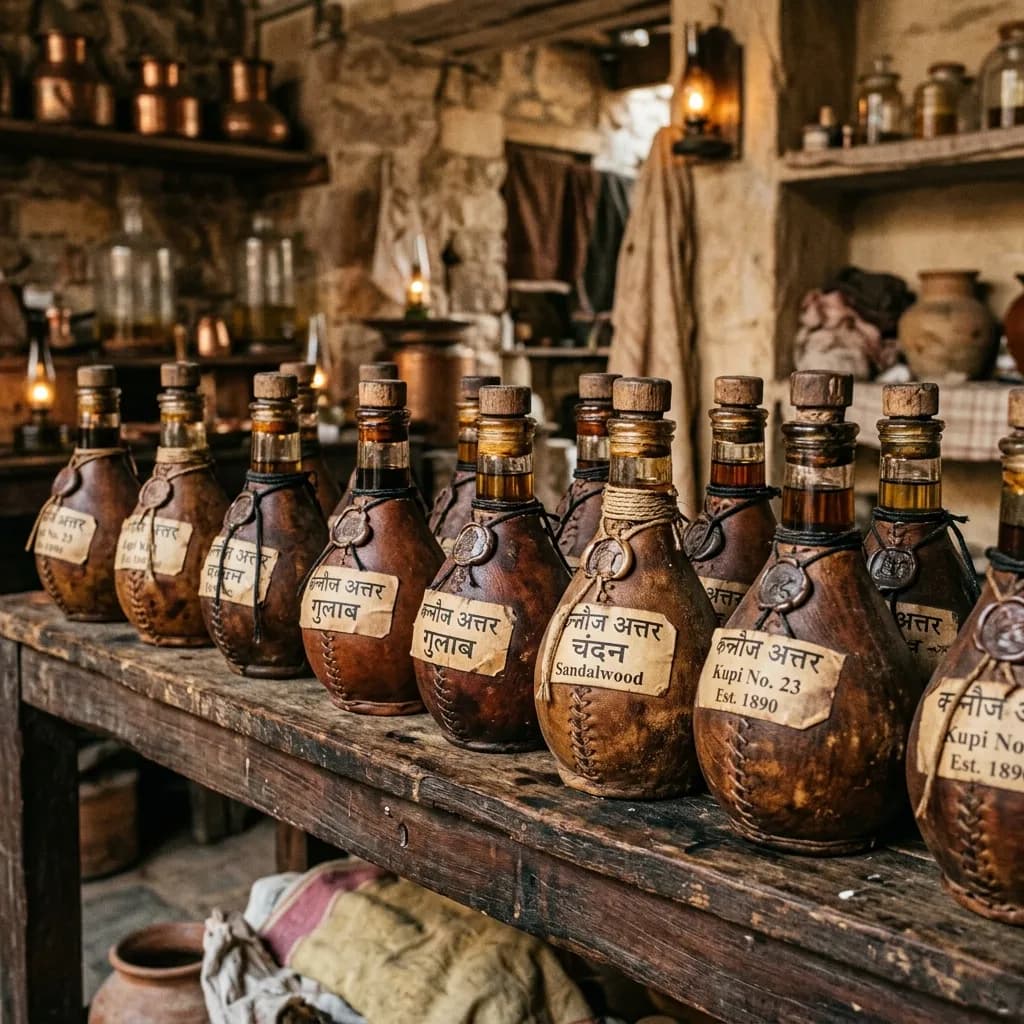
Today, Kannauj is home to many distilleries, most of them small, family-run operations. The town still wakes before dawn to harvest roses at their most fragrant, still fires copper stills with wood, and still ages its oils in leather bottles called kuppi. In a world of mass production, Kannauj remains a testament to the beauty of slow, intentional craft.
The Deg-Bhapka Process
The traditional way attar is made in Kannauj — a copper pot distillation process unique to India.
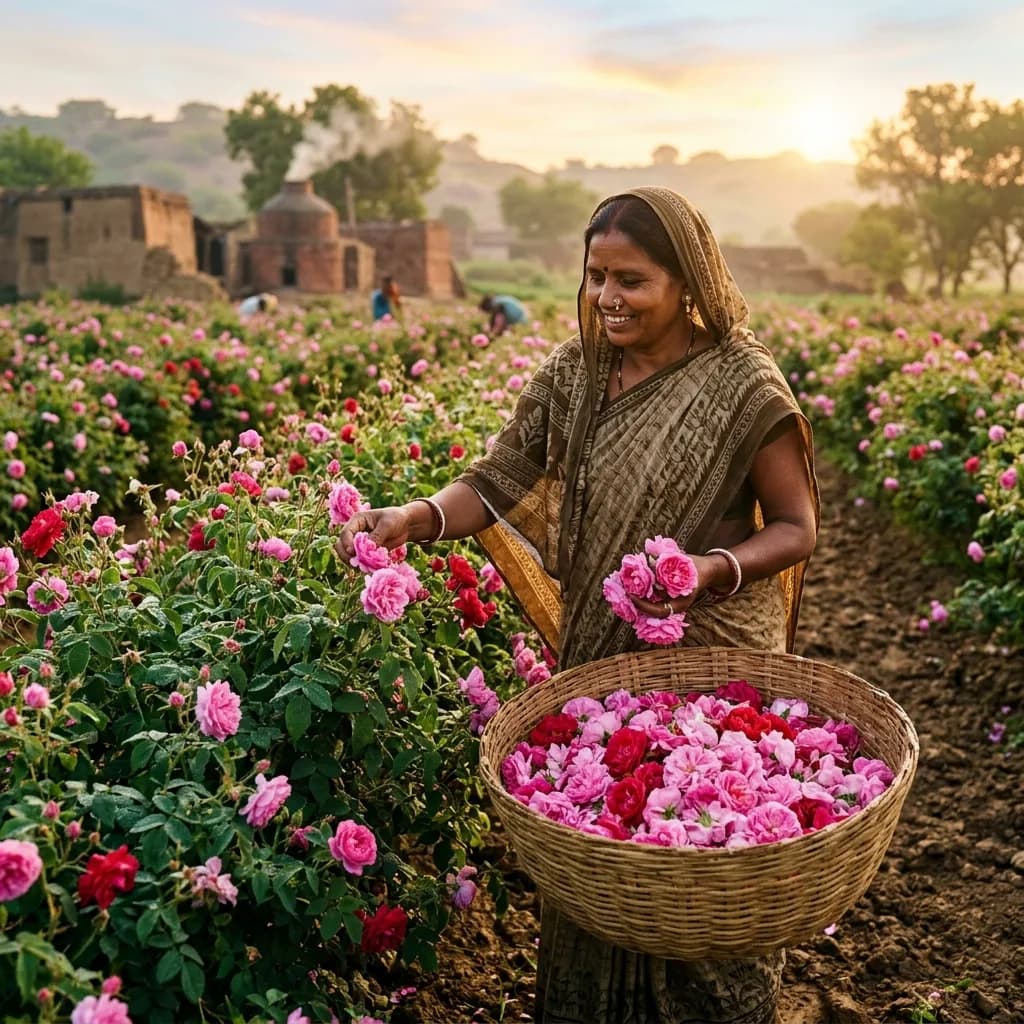
Harvest
Botanical materials — roses, vetiver root, sandalwood, baked clay — are sourced at the peak of their fragrance.
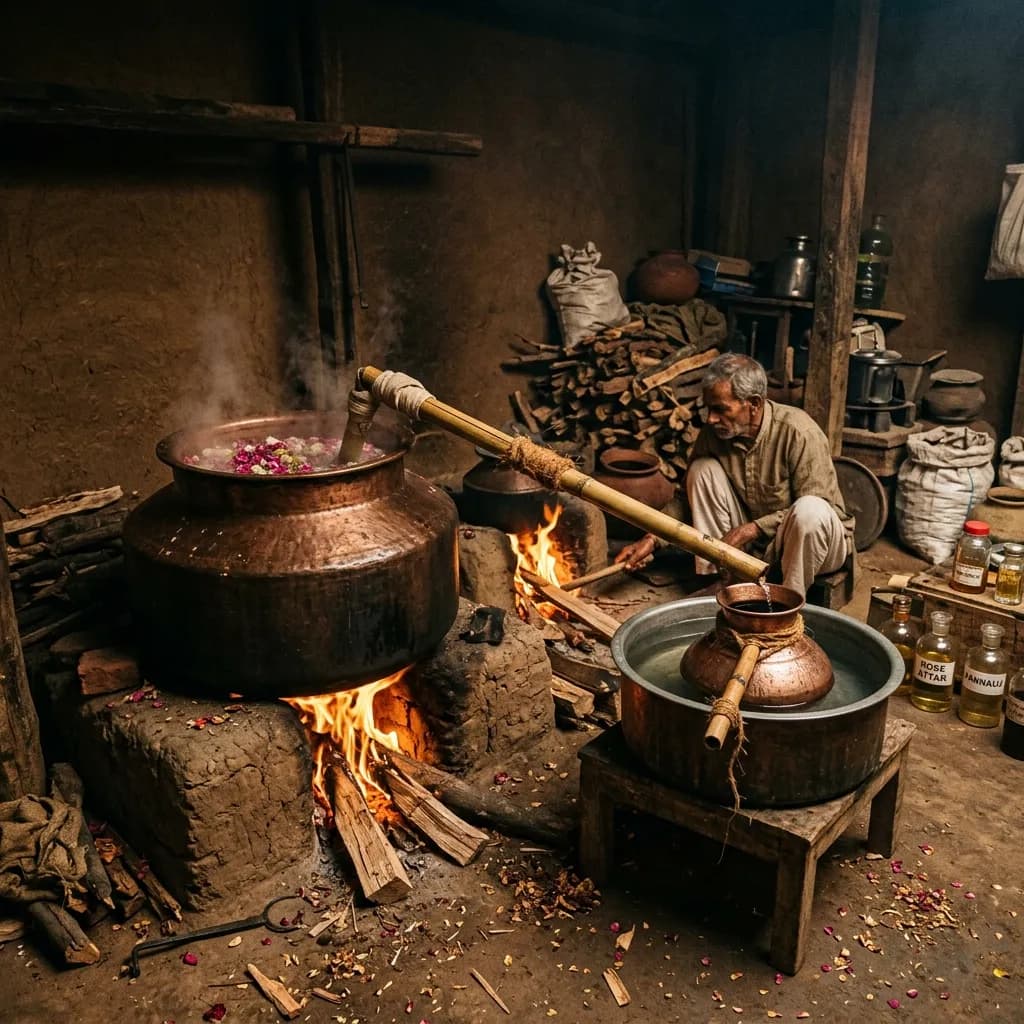
Load the Deg
Raw materials are placed in the copper deg (pot) along with water and sealed with clay for an airtight fit.
Distillation
The deg is heated over a wood fire. Steam carries the essential oils through a bamboo pipe (chonga) to the bhapka (receiving vessel) filled with sandalwood oil.
Separation
The distillate settles in the sandalwood oil base. Water is separated and returned to the deg. This cycle repeats for 15-20 days.
Aging
The finished attar is aged in camel-leather bottles (kuppi) for months, allowing the fragrance to mature and deepen.
Bottling
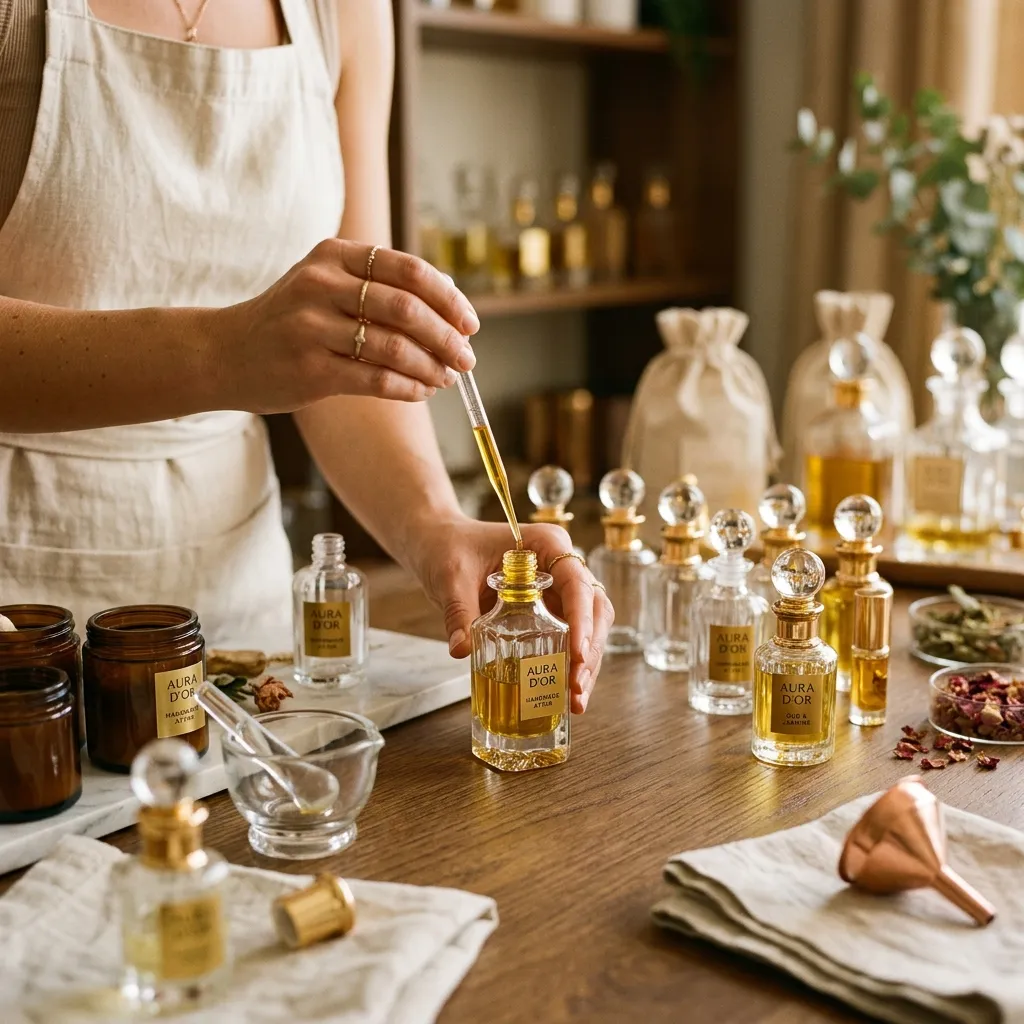
The finished oil is bottled by hand. This is the step we do ourselves.
A journey through time.
The Oldest Written Proof
The Arthaśāstra, an ancient Indian treatise on statecraft, grades about fifteen kinds of sandalwood and three of agarwood as goods fit for the royal treasury.
A Science of Blending
The scholar Varāhamihira devotes a full chapter of his Bṛhat Saṃhitā to perfume-making — a formal method for combining sixteen aromatics.
The Rise of Kannauj
Under King Harsha, Kannauj becomes the capital of north India — the town that would later give Indian perfumery its home.
Stills, Painted
The Ni'matnāma manuscript, made for the Sultans of Mandu and now held by the British Library, includes a painting of perfume stills and recipes for distilling rosewater.
Mughal Patronage
Attar is prized at the Mughal court. Emperor Jahangir's own memoirs credit his mother-in-law with a rose attar first made in his household — one drop, he wrote, "scents a whole assembly."
Kannauj, Documented
British colonial records describe Kannauj's rose gardens and its perfume trade in detail — by 1911, over six hundred people worked in the town's scent industry.
A Government-Registered Mark
"Kannauj Perfume" is registered as a Geographical Indication of India — an official mark, like Darjeeling tea, that only Kannauj can carry.
Itterio is Born
We saw the gap: extraordinary craft, ancient quality — but packaging and storytelling that didn't match the product. Itterio was built to bring Kannauj's liquid heritage to the world.
Why Itterio?
"We didn't invent anything new. We simply took something extraordinary that was hiding in plain sight and gave it the stage it deserved."
Kannauj's artisans create some of the finest fragrances on Earth — but they've been packaged for the local bazaar, sold in plastic vials, and priced as if the centuries of craft behind them didn't matter. Itterio exists to change that story.
We buy directly from a perfumer in Kannauj and bottle by hand, which keeps pricing fair, and give the oils the packaging and care they deserve — a new chapter for India's olfactory heritage.
Explore Our Collection